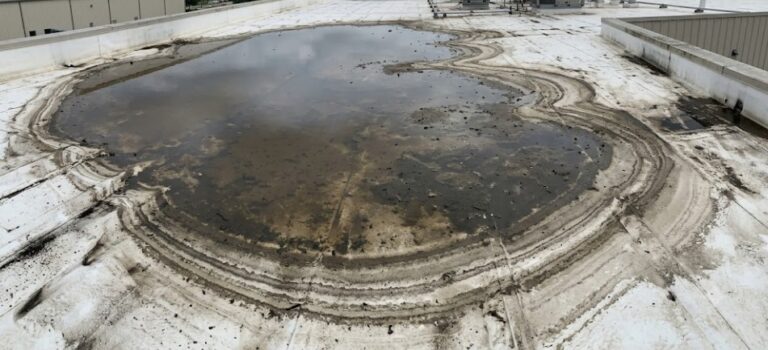
A low-slope commercial roof is engineered to shed water to internal drains, scuppers, or perimeter gutters. However, when drainage slows or structural low spots develop, standing water collects across the membrane field.
For commercial property managers and facility directors, standing water isn’t just an eyesore—it is a progressive structural liability that degrades roofing materials, adds massive weight load, and eventually compromises interior operations.
What Is the “48-Hour Rule” for Flat Roofs?
The National Roofing Contractors Association (NRCA) and the International Building Code (IBC) define ponding water as any water that remains on a low-slope roof surface 48 hours or longer after precipitation has stopped under average drying conditions.
While a minor film of water that evaporates within 24 hours is typical after a heavy downpour, water lingering past the 48-hour mark indicates a serious drainage defect that requires correction.
The 3 Major Dangers of Chronic Ponding Water
1. Severe Dead-Load Weight & Structural Deflection
Water is heavy—weighing approximately 5.2 lbs per square foot per inch of depth.
An area of standing water measuring 2,000 square feet at an average depth of 1.5 inches adds over 15,000 lbs of unplanned dead load to your building’s roof deck and joists.
This weight causes structural deck deflection (sagging), creating a deeper depression that holds even more water during the next storm cycle.
2. Accelerated Membrane Degradation
Standing water acts as a magnifying lens for ultraviolet (UV) radiation. Over time, heat and UV energy concentrated in the ponding area break down plasticizers, UV stabilizers, and seam tapes—leading to embrittlement, seam separation, and premature leaks.
3. Manufacturer Warranty Exclusion
Almost all commercial single-ply manufacturers (TPO, EPDM, PVC) include specific language in their commercial warranties regarding standing water. Unaddressed ponding can void your warranty coverage for leaks that occur within that region.
During a recent commercial inspection, we evaluated a 15-year-old single-ply membrane where the building owner was dealing with recurring interior leaks near their HVAC units.
The membrane itself was still in reasonable shape, but the failure was happening at the seams and flashing details.
Common Causes & Permanent Drainage Solutions
Common Cause
Root Problem
Permanent Drainage Fix
Clogged Drain Assembly
Leaves, dirt, or debris blocking drain strainers/scuppers
Bi-annual preventative maintenance & drain basket cleaning
HVAC Equipment
Large rooftop curbs blocking natural water flow to drains
Installation of tapered insulation crickets to divert water
Insufficient Roof Slope
Structural deck installed below minimum 1/4″ per foot slope
Retrofitting tapered polyiso insulation board before re-roofing
Low Spots / Sagging Deck
Compressed insulation or structural deflection
Applying high-solids silicone coating or leveling compounds
How to Fix Ponding Water Without a Full Tear-Off
If your underlying roof insulation is dry (verified via non-destructive thermal scan) but your membrane suffers from localized low spots, you may not need a full roof replacement:
- Tapered Crickets: Roofing contractors install diamond-shaped tapered insulation behind HVAC curbs and between drains to gently slope water away from dead zones.
- High-Solids Silicone Restorations: Unlike acrylic or asphaltic coatings, pure silicone is chemically inert to moisture. Silicone coatings cure into a seamless, rubberized membrane that withstands continuous ponding water without peeling or degrading.
Eliminate Standing Water on Your Commercial Roof
At Commercial Roof Assets, we diagnose flat roof drainage failures, clear blocked discharge points, and install custom tapered solutions to protect building structures across North Carolina.
At Commercial Roof Assets, we specialize in non-destructive thermal diagnostics, single-ply maintenance, and proactive roof preservation.
Schedule a Commercial Roof Drainage Inspection Today to identify low spots and protect your capital asset.
or call us:
(919) 533-9370
directly to speak with an experienced commercial asset specialist.